In 1916, according to Benjamin Lewin in Wine Myths and Reality, the Burgundy négociant Chauvenet sponsored the writer Colette to take the merchants’ side against the growers. Colette was born in Burgundy and was known as an olfactory novelist, for her many beautiful descriptions of smell. If anyone could have made the case for terroir, surely it was the lyrical Colette. Instead, in what looks like a decision of the head over the heart, she took Chauvenet’s sponsorship and argued for the négociants.
At the time, négociants dominated Burgundy. If a wine showed the character of Fixin or Pommard, they labelled it Fixin or Pommard. Through the inter-war years the growers campaigned hard for recognition, and some, such as the Marquis d’Angerville, bypassed the négociants altogether, which led to more bottling at the domaine and less dependence on the merchants.
When the appellation contrôlée system arrived in the mid-1930s, the growers had won the day, and Colette and the négociants had lost. Despite her arguments for the merchants’ “quality and style”, the land, the grower and the terroir had become officially more important.
What if Colette and the négociants had won?
Burgundy’s hierarchy of top vineyards is remarkably stable, based on maps going back to the 1860s. Unlike in Bordeaux, the vineyards valued most highly are still the top wines, with only minor shuffles among names such as Romanée, Musigny, Richebourg and Chambertin.
But is that consistency down to terroir? For all the detailed maps and complicated names, things are less consistent for the customer. Where the grapes come from matters for style, and people know roughly what to expect from Chablis or Volnay, but it says little about quality.
Leroy, for example, can command a much higher price for its Meursault than another producer can, so there’s not much point buying any Meursault off the shelf unless you know who made it. Once you know a good producer, though, there’s a strong chance of quality running from the top of the range to the bottom, and the care that goes into Leroy’s Richebourg can be found in its Bourgogne Rouge, as the price also suggests. Working backwards, it’s often worth trying the lesser wines of a good producer instead of grander wines from a less reliable one, or from one that simply had a poor year.
Since the second half of the twentieth century, Burgundy has moved from domaine bottling to something even more centred on the producer, which is why prices vary so much within a single village and why Burgundy can seem so confusing and mysterious.
From négociant blends to domaine bottling to superstar producers, Burgundy has changed over a century, and it will change again. With an excellent 2009 vintage on the way after a run of variable years, it will be a good chance to see whether the top producers move towards Bordeaux-style pricing.
This vintage may leave some Burgundy lovers unhappy. The heart may love Burgundy, but will the head, and the wallet? 2009 Burgundy will be expensive. Colette is said to have written that the lovesick, the betrayed and the jealous all smell alike. She might also have agreed that what smells good on everyone is money.
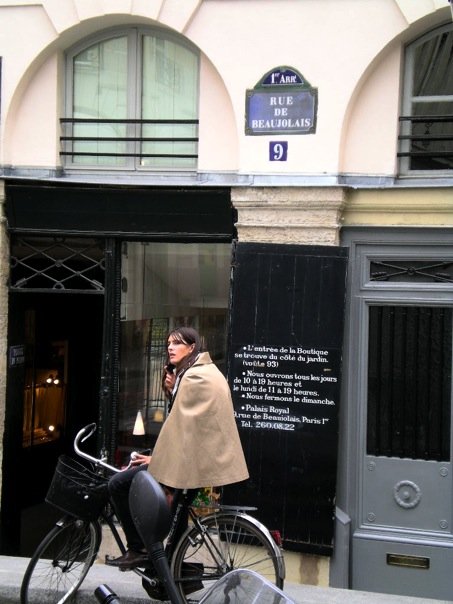
Image: outside Colette’s former home on the rue de Beaujolais, Paris (my own photo).
Archive note: First published in January 2011, before the 2009 Burgundies were released. Source: Benjamin Lewin, Wine Myths and Reality.


Leave a comment